Meta Orion
Discontinued · United States ·
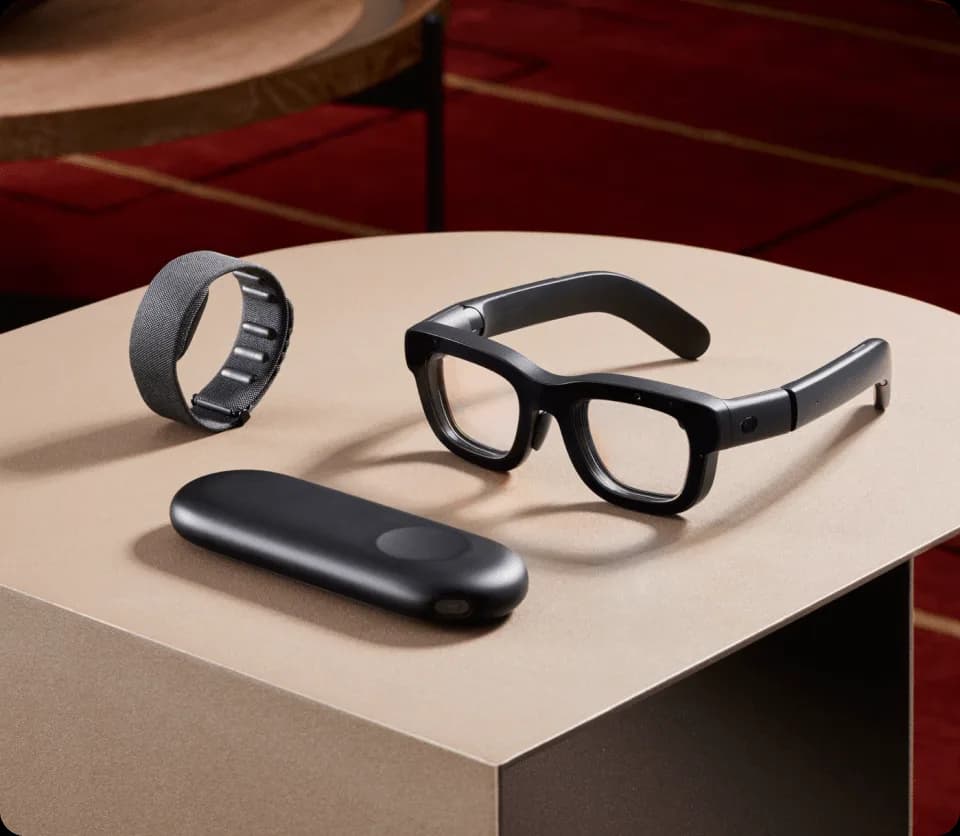
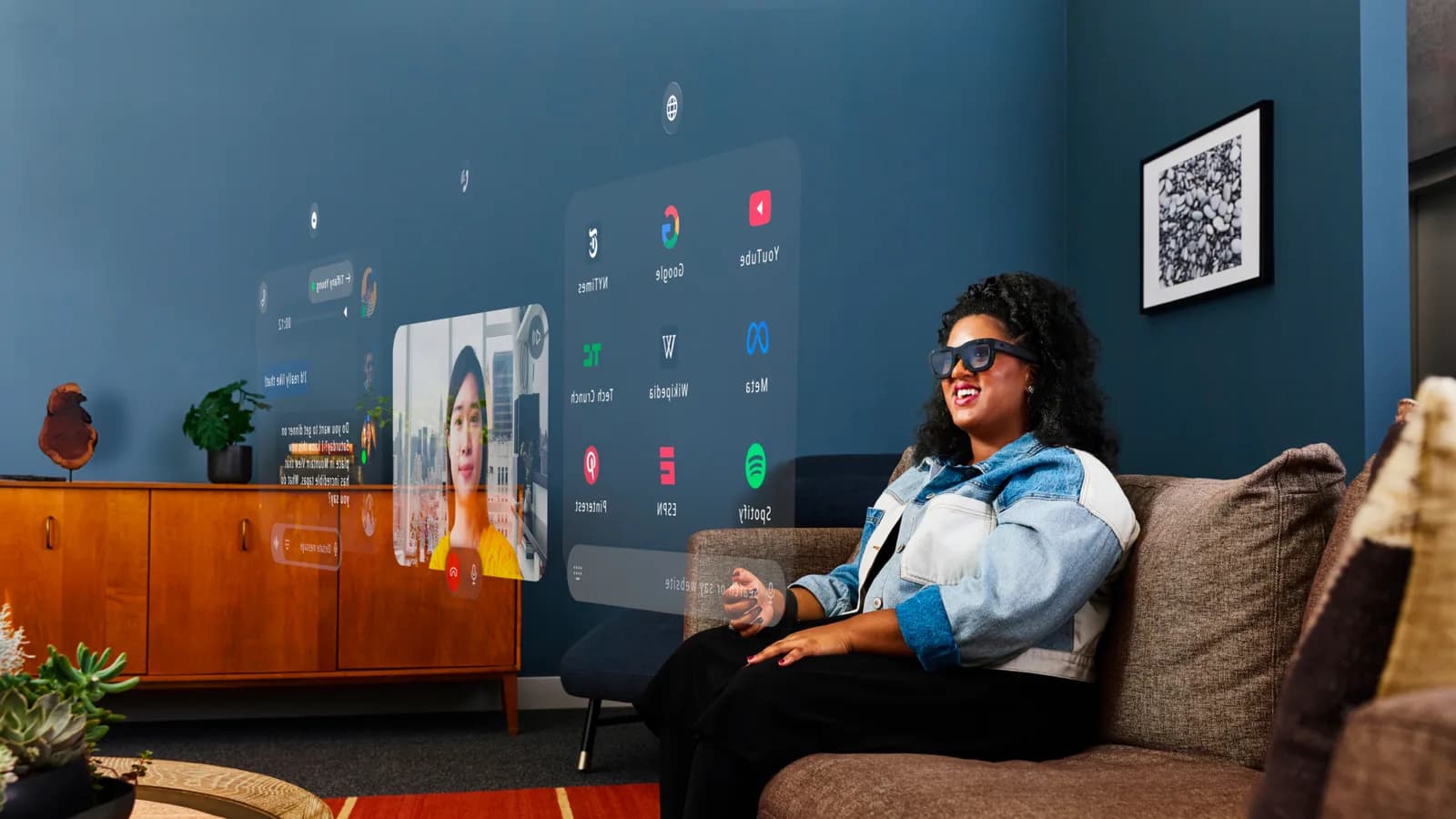
Orion is a Meta prototype shown on September 25, 2024: 98 g, full-color silicon carbide waveguides and 70 degrees of field of view. It runs on a wireless puck and an EMG wristband.
Specifications
| Field | Value | How we know |
|---|---|---|
| Brand | OFFICIALMeta | How we know: Meta Newsroom (about.fb.com) |
| Category | OFFICIALAugmented reality | How we know: Meta Newsroom (about.fb.com) |
| Form factor | OFFICIALGlasses frame | How we know: Meta Newsroom (about.fb.com) |
| Status | OFFICIALDiscontinued | How we know: Meta Newsroom (about.fb.com) |
| Maker country | OFFICIALUnited States | How we know: Meta Newsroom (about.fb.com) |
| Release | We have not checked | How we know: OPEN QUESTION |
| Announcement | OFFICIALSep 24, 2024 | How we know: Meta Newsroom (about.fb.com) |
| Display type | OFFICIALMicroLED projector + guia de onda | How we know: Meta Newsroom (about.fb.com)[1] |
| Display color | OFFICIALFull color | How we know: Meta Newsroom (about.fb.com) |
| Resolution | OFFICIAL~13 pixels por grau (ppd) | How we know: Meta Newsroom (about.fb.com)[2] |
| Field of view | OFFICIAL70° | How we know: Meta Newsroom (about.fb.com) |
| Brightness | We have not checked | How we know: OPEN QUESTION |
| Image in both eyes | OFFICIALYes | How we know: Meta Newsroom (about.fb.com) |
| Camera | We have not checked | How we know: OPEN QUESTION |
| Video | We have not checked | How we know: OPEN QUESTION |
| Microphones | We have not checked | How we know: OPEN QUESTION |
| Speakers | We have not checked | How we know: OPEN QUESTION |
| Wi-Fi | OFFICIALWi-Fi 6 | How we know: Meta Newsroom (about.fb.com)[3] |
| Bluetooth | We have not checked | How we know: OPEN QUESTION |
| Chip | OFFICIAL10+ chips de silício custom da Meta | How we know: Meta Newsroom (about.fb.com)[4] |
| Memory | We have not checked | How we know: OPEN QUESTION |
| Storage | We have not checked | How we know: OPEN QUESTION |
| System | OFFICIALSistema operacional próprio da Reality Labs | How we know: Meta Newsroom (about.fb.com)[5] |
| Developer access | OFFICIALSDK only for partners under contract | How we know: Meta Newsroom (about.fb.com) |
| Prescription lenses | We have not checked | How we know: OPEN QUESTION |
| Battery | We have not checked | How we know: OPEN QUESTION |
| Claimed battery life | OFFICIAL2 h | How we know: Meta Newsroom (about.fb.com) |
| Weight | OFFICIAL98 g | How we know: Meta Newsroom (about.fb.com) |
| Water protection | We have not checked | How we know: OPEN QUESTION |
| Price | We have not checked | How we know: OPEN QUESTION |
Notes
- 1.Display type. MicroLED projector plus a silicon carbide waveguide, a single full-color optical plate per eye
- 2.Resolution. About 13 pixels per degree (ppd) on the units shown in September 2024; later prototypes are quoted at about 26 ppd. The resolution in pixels is not officially published (unofficial estimate by Karl Guttag: on the order of 720x540).
- 3.Wi-Fi. Wi-Fi 6 (a custom protocol for the glasses to puck link, according to Heise)
- 4.Chip. More than 10 custom Meta silicon chips for on-board tracking and graphics; the main processing runs on an external wireless "compute puck" (CTO Andrew Bosworth described the compute envelope as "10x smaller" than the Quest's)
- 5.System. Reality Labs' own operating system, distinct from Horizon OS (Quest), stripped down for see-through AR optics and mobile use
Orion was never sold: Meta puts the build cost near US$10,000 per unit. That figure is from the September 25, 2024 announcement; UploadVR counts about 1,000 units built, and there is no retail price.
What we measured in the lab
We did not measure this device in the lab.
Our review
For
- The Verge called the 70 degree field wider than any competing AR glasses shown to that date.
- Tom's Guide found it comfortable for extended wear, TechRadar light at under 100 grams.
- UploadVR's developer guest saw optical see through AR with no passthrough lag, above 72 fps.
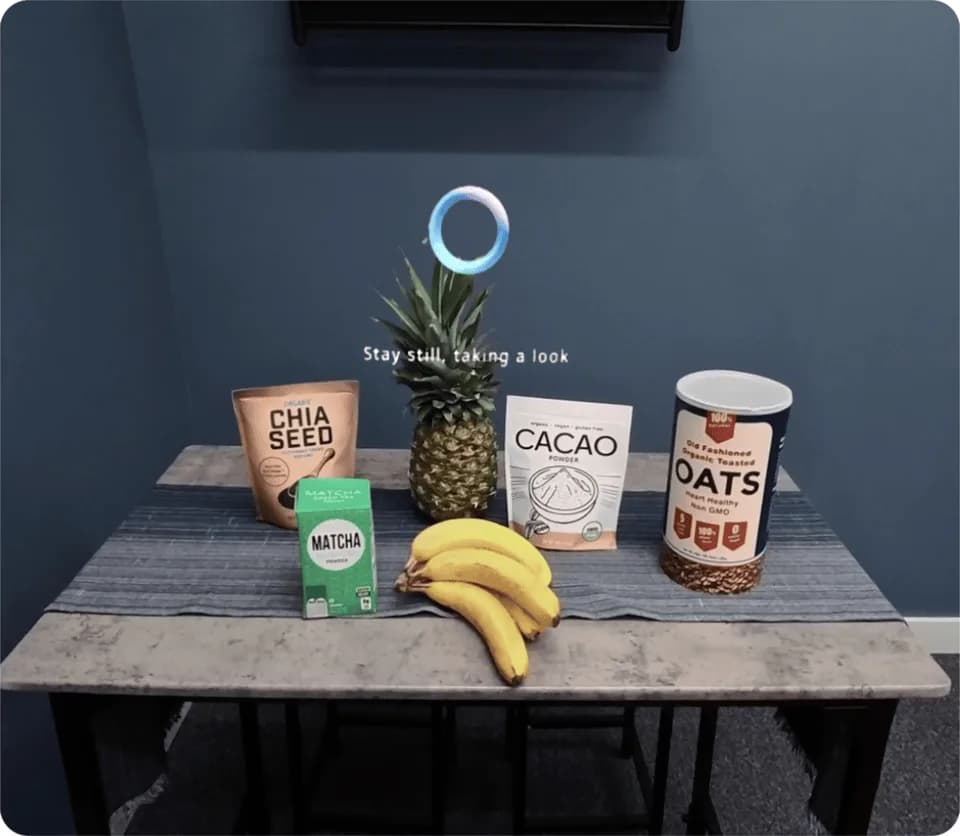
- TechRadar praised the eye and gesture tracking and the object recognition in the demo.
Against
- No public SDK: Meta gave devkits to a few picked developers and plans no consumer launch.
- The Verge reports the wireless puck caps range at about 12 feet, with about 2 hours of battery.
- The Verge calls the silicon carbide lens yields very poor, and TechRadar doubts they scale.
- UploadVR's guest reports no true black and one crash; TechRadar's unit needed reboots.
- TechRadar found the EMG wristband gestures inconsistent and the band slipping down the wrist.
Orion was never for sale. Meta showed it on 25/09/2024, states a build cost near US$10,000 per unit, and UploadVR counts about 1,000 units made. The record is a 98 gram frame with silicon carbide waveguides and MicroLED projectors, 70 degrees of field, around 13 pixels per degree, and a wireless puck doing the computing.
The app question has a short answer: no public SDK exists. Meta handed devkits to a small group of picked developers from September 2024, Bloomberg reported a plan to widen that in 2026, and no confirmation of it was found. The system is Reality Labs' own, and Meta has said publicly that no consumer version of Orion is planned.
The four hands on pieces converge on the hardware. The Verge called the field wider than any competing AR glasses shown to that date and still described the demo as heavily scripted. Tom's Guide found the frame comfortable, TechRadar light at just under 100 grams. Alex Coulombe, writing as a developer for UploadVR, saw optical see through with no lag, above 72 fps.
The limits are documented just as well. The Verge puts the link to the puck at about 12 feet and the battery at about 2 hours, while Tom's Guide wrote 3 to 4 hours. Coulombe reports that it cannot render true black and that the software crashed once; TechRadar found the EMG wristband inconsistent, and its reviewer could not wear prescription glasses with it.
Verdict
A prototype that was never sold: Meta puts the build cost near US$10,000 per unit and UploadVR counts about 1,000 made. The Verge and TechRadar praised the 70 degree field of the 98 gram frame, on about 2 hours of battery off a puck. Read it as a reference, not as a device to buy or write for.
Images
Meta · about.fb.com
Meta · about.fb.com
Sources
- Introducing Orion, Our First True Augmented Reality Glasses · Meta Newsroom (about.fb.com) · retrieved on Sep 04, 2026
- Hands on with Orion, Meta's first pair of AR glasses · The Verge · retrieved on Sep 04, 2026
- Meta Orion AR glasses hands-on: The first AR glasses I actually want to wear · Tom's Guide · retrieved on Sep 04, 2026
- Meta Orion AR Glasses Developer Hands-On: Viewing The Future · UploadVR · retrieved on Sep 04, 2026
- Meta's 'Orion' Prototype AR Glasses Have 70 Degree FOV · UploadVR · retrieved on Sep 04, 2026
- Meta Orion AR Glasses (Pt. 1 Waveguides) · KGOnTech (Karl Guttag) · retrieved on Sep 04, 2026
- Meta Orion: AR glasses between genius and megalomania · Heise Online · retrieved on Sep 04, 2026
- Meta Could "Offer" Orion AR Glasses To Developers Next Year · UploadVR (citing Bloomberg's Mark Gurman) · retrieved on Sep 04, 2026
- Meta Orion AR glasses: the latest news on the game-changing prototype · TechRadar · retrieved on Sep 04, 2026
- The Shadow Of Orion Looms Over Meta Connect 2025 · UploadVR · retrieved on Sep 04, 2026
- Meta Explains Why Porting From Quest To Orion Won't Be Easy · UploadVR · retrieved on Sep 04, 2026
- Meta Orion hands-on: if this is a prototype the finished product is going to be incredible · TechRadar · retrieved on Sep 04, 2026